Hip dip correction · targeted fat transfer · Istanbul

The hollow squats can't fill. Your own fat can.

Hip dips are skeletal anatomy — normal, common, and untouchable by exercise. If yours genuinely bother you, targeted fat transfer smooths the waist-to-thigh line with your own living tissue. Honest anatomy education first, surgery by Assoc. Prof. Dr. Ayhan Işık Erdal second — for international patients in Istanbul.

"Do nothing" is a respected answer
150–400 cc per side, micro-droplet
FACS & FEBOPRAS — verifiable
Assoc. Prof. Dr. Ayhan Işık Erdal, hip dip correction surgeon in Istanbul
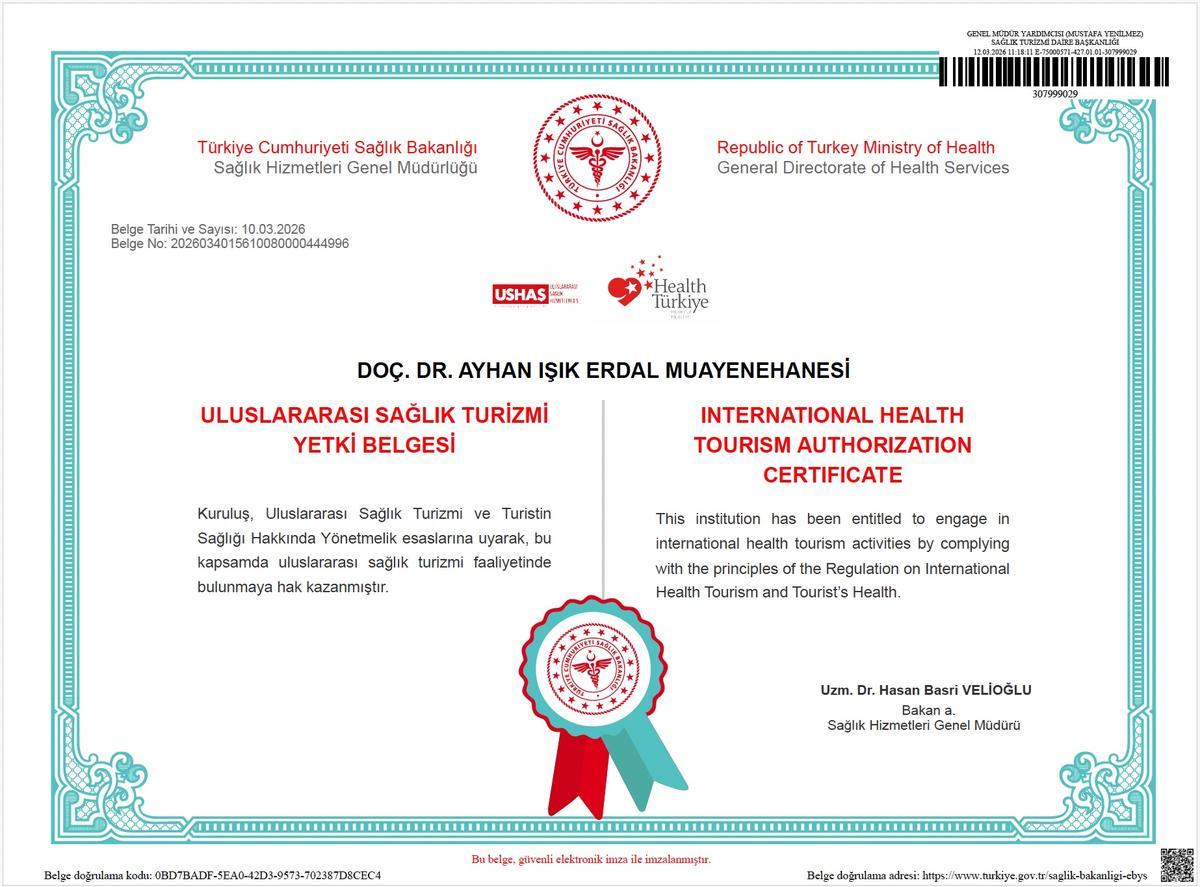
Health-tourism authorisation certificate
Ministry-authorised practiceHealth-tourism certificate · verifiable
Anatomy education firstNothing is wrong with you — informed choice only
Exercise honestySquats can't fill bone geometry — we say so
Your own tissueWhat survives is permanent — no device
5–7 day tripSitting fine — one of contouring's lightest recoveries
Start honest

Six things to know before any decision

The education most clinics skip — because informed patients make better choices, including the choice to do nothing.

It's Anatomy, Not a Flaw

Hip dips are the visible signature of your skeleton — where the femur meets the pelvis, and how your fat happens to distribute around that geometry. Most bodies have them to some degree. Nothing is wrong with you; something is simply shaped like you.

Why the Gym Couldn't Fix Them

Squats build gluteus muscle above and behind the dip — they cannot fill a hollow created by bone position and fat distribution. If training made your hips stronger but the dip stayed, you didn't fail; you were solving the wrong kind of problem.

Targeted Fat Transfer

Your own fat, harvested gently nearby, placed micro-droplet by micro-droplet into the lateral hollow — living tissue smoothing the line from waist to thigh. No implant, no device, entry points of a few millimetres.

A Waist Bonus, Honestly Sized

The donor fat usually comes from the flanks and waist — so the hourglass improves from both directions at once: the dip fills as the waist refines. A genuine bonus, framed honestly as contouring, not weight loss.

With or Without Gluteal Augmentation

Hip dip correction stands alone perfectly well — targeted lateral volume, natural projection untouched. It can also accompany fuller gluteal fat grafting when that's genuinely your goal. This site, and this assessment, centre the dip.

And If You Choose Not To?

Equally valid. This page exists to inform a choice, not to manufacture an insecurity — hip dips are normal anatomy, and 'do nothing' is a respected outcome of assessment here.

The method

Volume placed exactly where geometry lacks it.

Fat is harvested gently from the flanks or waist, purified to concentrate living cells, and placed into the lateral hollow in many micro-droplet passes — typically 150–400 cc per side, planned around the honest ~50–70% survival arithmetic. Entry points are millimetres, hidden in natural lines. The waist refines as the dip fills: the hourglass improves from both directions at once.

  • What survives is permanent — living tissue, judged honestly at 3–6 months.
  • No implant, no device, no maintenance schedule.
  • Slim-friendly volumes — accessible where a full BBL wouldn't be; and "not enough donor fat" is an answer given plainly when true.
The procedure in full

The recovery plot twist

The grafted zone is your sides — so side-sleeping is the one banned position for ~3 weeks, while back, front and sitting are completely free. The mirror image of BBL rules, and one of body contouring's most office- and travel-friendly recoveries.

The full recovery guide
How it works

From photos to the settled result

1

Send photos from home

Front and back views in fitted underwear or leggings, plus your goal in your own words. Dr. Erdal personally assesses your dip pattern, donor fat and skin.

2

The honest read

What fat transfer can smooth for you, roughly what volume per side your anatomy suggests, whether you have the donor fat to do it — and, where relevant, 'your contour doesn't need surgery.'

3

A written all-inclusive quote

Surgeon, hospital or accredited facility, anaesthesia, garments with lateral protection, transfers and follow-up — one figure, no extras later.

4

A short Istanbul trip

Typically 5–7 days: examination and confirmation, the procedure (usually 1.5–3 hours), early recovery and a review before flying.

5

The procedure, personally performed

Gentle harvest from the waist or flanks, purification, and micro-droplet placement into the lateral hollow — every pass by Dr. Erdal's hand.

6

Aftercare that follows you home

Photo reviews as swelling settles over weeks, the side-lying rules reinforced, and the 3–6 month verdict reached together.

Dr. Ayhan Işık Erdal
Your surgeon

Fat survival is one craft. He practises it everywhere.

From facial lipofilling to breast restoration to the lateral hip — micro-droplet placement, gentle harvest and respected ceilings are the same discipline, and Dr. Erdal applies it identically wherever the destination.

  • FACS & FEBOPRAS — American College of Surgeons and the European board; both independently verifiable.
  • Associate Professor — Hacettepe (MD), Gazi residency, Memorial Sloan Kettering (New York), Ghent University; 30+ publications.
  • Health-tourism authorisation No. 2026034015610080000444996.
More about Dr. Erdal
Real results

Five consented cases, shown honestly

Early post-op views labelled as exactly that — bruising included — plus a one-month case mid-settling. Nothing borrowed, nothing retouched.

From everywhere

A 5–7 day trip, wherever you start

United Kingdom & Ireland

Direct flights from London, Manchester, Edinburgh and Dublin, ~4 hours. A 5–7 day trip fits inside a single week of leave.

United States & Canada

Direct routes from New York, Chicago, Toronto and more (9–11h). The short stay and modest recovery make this one of the most travel-friendly contouring procedures.

Germany & the Nordics

Frankfurt, Berlin, Copenhagen, Stockholm, Oslo and Helsinki connect directly in ~3–4 hours.

Australia, the Gulf & beyond

Istanbul is one of the world's best-connected hubs — and hip dip correction's light recovery suits even long-haul returns, with individual DVT planning for the flight.

From the blog

The questions you've been googling, answered straight

Honest Answers

Can Exercise Fix Hip Dips? The Honest Anatomy Answer

The internet's most-asked hip dips question, answered with bones instead of hashtags.

2026-07-10 · 5 min read
Anatomy

What Causes Hip Dips? (Spoiler: You're Built Normally)

Femur geometry, pelvis width, fat patterns — the unglamorous science of a completely normal contour.

2026-06-30 · 4 min read
Decisions

Hip Dip Correction vs BBL: Different Goals, Different Operations

Targeted lateral smoothing versus global augmentation — how to know which conversation you're actually in.

2026-06-20 · 5 min read
Questions

Hip dips, answered

What exactly are hip dips?
Inward curves on the outer hip, between the hip bone and the thigh — created by your skeletal geometry (where the femur's greater trochanter sits relative to the pelvis) and how fat and muscle distribute around it. They are a normal anatomical variant visible on most bodies to some degree, more on some frames than others. They are not a sign of being unfit, overweight, underweight or 'built wrong.'
Can exercise get rid of hip dips?
Honestly: no — and you deserve that answer before spending another year trying. The dip sits over bone position and fat distribution; the muscle that squats and side-work build (gluteus medius and friends) lies largely above and behind it. Training improves strength and overall shape and is worth doing for its own sake — but it cannot place volume into a hollow that bone geometry created. That's precisely why fat transfer, which does place volume exactly there, works.
How does hip dip surgery work?
It's targeted fat transfer: fat is harvested gently by fine liposuction (usually from the flanks, waist or thighs), purified to concentrate living cells, and placed into the lateral hollow in many micro-droplet passes across the right planes. The entry points are a few millimetres, hidden in natural lines. The result is your own living tissue smoothing the waist-to-thigh line.
How much fat is needed per side?
Typically somewhere in the range of 150–400 cc per side depending on the depth and length of your dip and the smoothness you're after — your assessment gives you your number. Because roughly 50–70% of transferred fat survives long-term, placement is planned with that arithmetic — modest deliberate over-correction within safe limits, judged honestly at 3–6 months.
Is hip dip correction the same as a BBL?
No — and the difference matters for choosing what you actually want. A BBL is global gluteal augmentation: projection, size, shape of the buttock itself, usually with large volumes. Hip dip correction is targeted lateral work: filling a specific hollow so the silhouette line flows, often with far more modest volumes and no change to projection. They can be combined when both are genuinely wanted — but neither requires the other.
Am I too thin for hip dip surgery?
Sometimes, honestly. The plan needs harvestable donor fat, and hip dip correction's modest volumes make it accessible to slimmer patients than a full BBL — but very lean bodies can still lack the material. Photos settle it quickly, and 'not enough donor fat' is an answer you'd be given plainly rather than discovered on the table.
Start here

Two photos. One honest answer.

Front and back views in fitted underwear or leggings, plus your goal in your own words — Dr. Erdal personally replies with the honest read: what's achievable, your rough volume, and whether surgery serves you at all.

Reviewed personally by Dr. Erdal — including, honestly, whether your contour needs surgery at all. No obligation.

Cookies. We use analytics cookies (Consent Mode v2). Choose freely — the site works either way.